by Damla
“Dr. Robert Laing is sitting on the balcony of his apartment on the 25th floor of the high-rise, contemplatively eating a dog while thinking about the absurd and sinister events befallen on the inhabitants of the tower.”
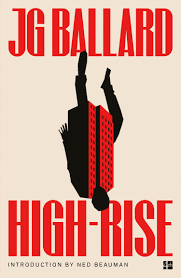
This is the start of the cult 1970’s novel High-Rise by J.G. Ballard about a dystopia told in the scale of an apartment building. The tower is designed as a vertical city of 40 floors, housing 1000 apartment units for respected white-collar professionals, where the daily life functions are almost exclusively self-contained in the building: a supermarket, swimming pools, a bank, a junior school, and a sculpture park for all to enjoy on the roof level. In other words, luxury living to die for.
However, as the critical services, infrastructure, and amenities of the building start to fail, passive-aggressive tensions among the residents eventually start to rise, escalating to violence and mayhem. In an almost Lord of The Flies-like turn of events, the self-declared elites and the upper class society inevitably spiral down into uncivilized chaos, where the top and lower floors fight for dominance on the battleground of the middle floors.
Filled with humorous critiques of society and explosive scenes, this is certainly an interesting read in a world where new, luxurious high-rise residential complexes spring up at alarming speeds in our cities. Ballard expertly balances the absurd and the shocking while evoking an interesting question: Can architecture influence society? Or more precisely, can the place you live change your behavior? As the “elite and rich” succumb to feral behavior and primal urges all too easily in this fictional tower, egged on by the deteriorating conditions of their homes, it is difficult to look away from the growing hysteria and hypocrisy while also pondering about our own living spaces.
Now, is J.G. Ballard’s High-Rise a warning for the future of society? Certainly not. This book is neither a documentary nor a morbid premonition. However, it is a fantastic satire about the sense of entitlement of the wealthy, the power of architecture on human psyche, mob mentality, and perhaps even the architects’ ego to play God.
As far as dystopias go, this is one perfectly blood-chilling (and entirely avoidable) nightmare!
This post was previously published on Damla’s blog in longer format.