by Damla
In case you missed it, the publishing world has been shaken up recently by the allegations that a much hyped new horror book was largely AI-generated or assisted. The book in question, Shy Girl by Mia Ballard, was flagged by many readers after its release in the UK with suspicions of AI-involvement, rapidly escalating into a massive debate online and an internal review of the work by its publisher Hachette. In response, the author has denied any use of AI herself, but admitted that an acquaintance hired as an editor had used AI tools on an earlier edition of the book. Consequently, Hachette has cancelled the US release of the title and called for a roll-back of the book from the shelves in the UK. It also no longer appears on the database of online retailers in some regions.
You might be thinking, “What’s the big deal? Isn’t this a bit harsh considering that Amazon is full of AI-generated books already?” AI has in fact been one of the catalysts of the recent self-publishing boom. However, like many other publishers, Hachette has a strict policy that all use of AI must be disclosed in any of the works that they publish.
With the rapid developments in the large-language-model (LLM) generative AI platforms, the authenticity and source of published materials have started to undergo much scrutiny. The troubles in the literary sphere are threefold: the publishers are left to suspect any undisclosed AI use; the authors worry about infringement of their intellectual property by the platforms; and a good majority of readers have expressed their rising concerns about unknowingly consuming AI-generated media.
Publishers on AI
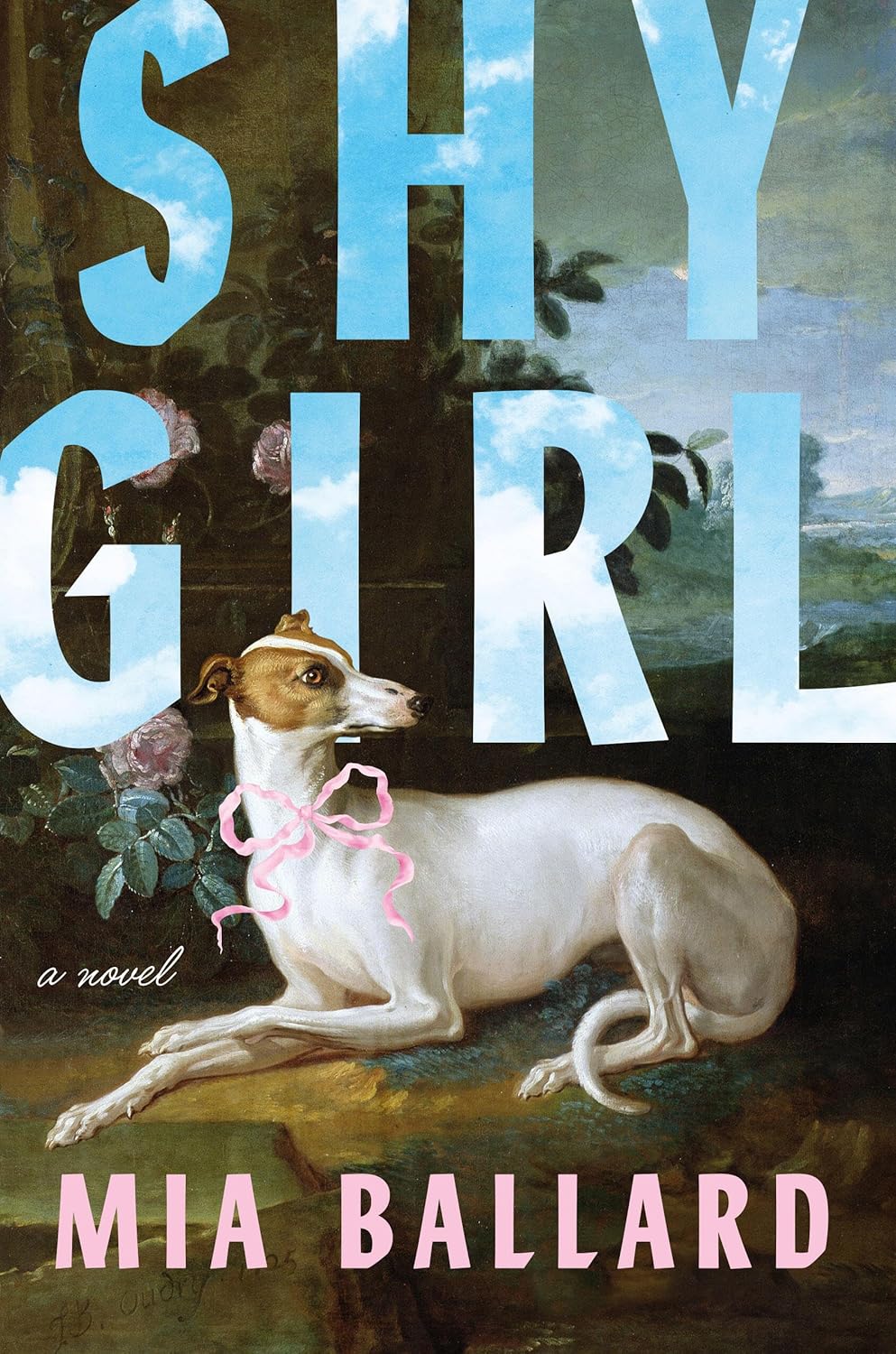 The Shy Girl case has naturally raised a lot of questions about the rising prevalence of AI in creative spaces and the role of publishing professionals in detecting it. Shouldn’t a publisher be extra cautious about the authenticity of the works they are publishing? Wouldn’t they have enough experience with new manuscripts to detect any red flags?
The situation is not so simple, unfortunately. There is a rising tide of self-published works gaining massive popularity in online circles, leading them to be picked up by big publishers. While these titles undergo at least a perfunctory editing process, the line between clumsy debut attempts at language-wrangling and AI-generated mumbo jumbo can blur quite fast. After all, there is no reliable method of detecting AI and the few platforms online promising to do just that can be vastly erroneous to the panic of many authors (and students) accused of plagiarism.
This is one of the biggest obstacles that the publishing industry faces in cases such as Shy Girl. Emily Hughes, a writer and editor, mentions the dilemma in her article:
“Something that gets lost in these discussions is that there’s huge overlap between LLM “writing” and inexpert or clumsy human writing, and Shy Girl sits squarely in the middle of that overlap. People have pointed to certain metaphors, constructions, and turns of phrase as ironclad evidence of LLM use, but just because they happened to be correct in this instance doesn’t mean that these elements are reliable indicators all the time.”
– Emily Hughes, writer and editor
In the end, the constant suspicion creates tension in the industry and erodes the trust between authors and publishers (not to mention the readers, but we’ll get to that in a little bit).
Authors Versus AI
Perhaps most negatively affected by the rise of AI are authors and other creatives in the industry. Most LLMs are trained on published work, almost always without the consent of the creators. Although AI is advocated as a tool to make art more accessible and to diminish the divide created by disabilities or time and financial privileges, the advantages come at the cost of intellectual property theft. Any AI-generated work swallows up a prompt by the user, and churns out a piece of art that heavily utilizes others’ works without any credit. Any artwork might be more accessible at the press of a button, but the process essentially devalues art itself, whether it is visual, literary, or audio.
This problem doesn’t only impact the authors but also other artists in the industry: AI has also been proposed as an alternative to editors, audiobook narrators, and cover designers.
Hurting Consumer Confidence
Besides its ecological concerns, most public backlash regarding AI use is directed towards the generative kind. Yes, it might be fun to turn your pet’s photo into a human or your latest selfie into a superhero, but there is also a more sinister use of AI that affects the data we absorb every day. With the danger of deepfakes that become more convincing by day, the massive news pool growing more and more fertile for misinformation, and new personal safety issues, the internet has become more deceptive than ever. As it becomes harder to tell the difference (and soon we won’t be able to at all), consumer confidence is degrading at a rapid pace.
In addition to this, there is also the integrity and spirit of literature as a form of art. Storytelling has been a part of human history for millennia, and the best stories have never been mere regurgitations of existing ones. A good story combines elements of personal experience, cultural and historical context, and a particular interpretation of the craft that is unique to each author. This is something AI cannot replicate or generate from scratch.
That’s why you might have seen many suspicions, rumors, and accusations swirling around AI use many times on your preferred social platforms for any topic ranging from important bits of news to a new product gaining popularity online.
 The same concern goes for the books on the market today. It has become such a hot topic that the UK society of authors has suggested an official logo to identify books that were 100% human-written.
AI on trial
It often happens that our technological advances outpace our legislative speed. This means that most new tech can roam freely in the playground of the internet without any restrictions or legal barriers.
This is why many LLM AI assistants could be trained on an endless source of data, mostly consisting of books and articles. Now that most of us can see what these models are capable of learning and re-generating, the question of consent and copyright is at the forefront. While we wait for legislation to catch up with the repercussions of AI in other fields, publishers have already gotten the ball rolling with copyright lawsuits.
At the moment, there are many infringement lawsuits underway, starting with publishers vs. Google’s Gemini and the 90s psychology and wellness company Chicken Soup For The Soul vs. pretty much all major tech companies. Just last year, AI startup Anthropic made a settlement to pay 1.5 billion dollars (you read that right!) for a similar case. Whether all injured parties got compensated for the theft out of this large sum can’t be verified, of course.
Rise Against The Machines
In the meanwhile, the public resistance against AI is mounting while all large companies seek to insert AI tools into every feature they possibly can. Here are some protests made against the use of AI in the art world:
- Ten thousand authors in the UK have joined resources to publish a completely empty book called Don’t Steal This Book, in response to the commercial research exception status for AI training.
- Many famous authors (with George R.R. Martin, John Grisham, Jodi Piccoult, David Baldacci, and Michael Connelly among them) have joined a lawsuit against OpenAI for copyright infringement.
- In addition, Michael Connelly speaks here about the repercussions of the fast-evolving AI on writing.
- A group of Hollywood stars such as Scarlett Johansson, Cate Blanchett, and Joseph Gordon-Levitt have signed a petition called “Stealing Isn’t Innovation” in opposition to AI training on stolen art.
- Spotify has taken a song off the Swedish charts when it was uncovered that the song was at least partially AI-generated.
- English professors at Yale have been pushing printed copies instead of digital texts to promote more focused reading and text engagement.
- There has been massive backlash from publishers after the online writing tool Grammarly added many AI features, most controversial one being a feature that impersonates authors.
In fact, there has been so much push back on AI lately that analog living has made a comeback. Vinyls, crafts and hobbies involving manual efforts like coloring, knitting, and journaling have risen in popularity in the past years. You can see our Naomi’s take on this phenomena here.
The other side
 That is not to say that there aren’t readers, authors, or publishers out there who don’t support AI. After all, Shy Girl was read (and liked) by plenty of readers before it was picked up by a big publisher. The fast-growing market of AI-generated romance books has found its own readers on digital platforms already. Equipped with a dozen pen-names, a list of best-liked tropes, and an hour to spare, the hundreds of romance books generated by the AI tool Claude easily find their place on the digital shelves of many a reader. For most, it seems that the important distinction is not the quality of the work (one can argue that there are also plenty of badly-written but enjoyable books by humans) but it is important that the reader is openly informed who/what the author is.
There are also some publishers on the other side of the AI debate who embrace the new technology. There is Bloomsbury offering authors to opt-in licensing their work to train AI, Harlequin’s contract with Dashverse to create animated microdramas, HarperCollins partnering with Toonstar for a similar project, and the Dutch publisher Veen Bosch & Keuning integrating the use of AI to translate commercial fiction. Many self-published authors use AI tools to edit or design elements in their books to reduce costs. On the far end of the spectrum, there is also the controversial author James Frey who embraces the tech fully to help him “write the best book possible.”
In any case, we are at a new turning point for the publishing industry in step with the new tech advances. Whether this painful debate becomes a distinct fork in the road that separates human and tech creations, or just a bump in the road before the two inextricably blur together, remains to be seen.