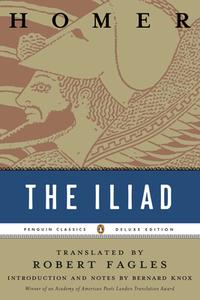
The Iliad by Homer
One of the epics in Western literature, The Iliad recounts the story of the Trojan wars. In his introduction, the author observes that although the violence of the Iliad is grim and relentless, it co-exists with both images of civilized life and a poignant yearning for peace.
by Damla
“The bossed shields beat one upon another, and there was a tramp as of a great multitude – death-cry and shout of triumph of slain and slayers, and the earth ran red with blood.”
The ancient Greeks knew what they were doing. With an abundance of sex, blood, and tantalizing high stakes, they pretty much invented the foundation that Hollywood is built on today. How else can you explain how an epic poem written almost 3000 years ago can still be so gripping and relevant in 2026?
The Iliad doesn’t really need an introduction. Telling the tale of fears, hopes, pride, hubris, lust and greed of men in vicious battles at the mercy of capricious gods, it is as classical Greek as it gets. However, what needs to be said is how surprisingly accessible and entertaining it all is. I am not even talking about the captivating and incredibly imaginative (“the spear went in WHERE now?”) battle scenes, and the hilariously petty fights among the gods. There is so much to take away here: Taking a cheeky little break during the battle to tell your adversary about your lineage? You got it! Attacking an actual river because your lover has been killed? Reasonable. Organizing mini Olympics in the middle of a month-long battle to honor the dead? If you ain’t having fun during this carnage, you are doing it WRONG.
I would, however, recommend the prose version of The Iliad if you are averse to poems like myself. After giving the verse edition a try (which is truer to its original form), I found that I enjoyed the tale so much more in its fluid prose version. I think it loses nothing from its original text, but then again, I am no academician.
My only disappointment was that it ended too soon. The story itself ends with the death of Hector (do NOT come for me for spoilers about a 2800 year old story PLEASE). Not a sight of the famous Trojan horse to be seen! Not a word on how the battle ends. The author(s?) really said, “Ask Virgil if you want more” and then DIPPED.
However, the adventures do continue on for one poor soul Odysseus in The Odyssey (for which you can find my book review here), so there is always THAT to look forward to.