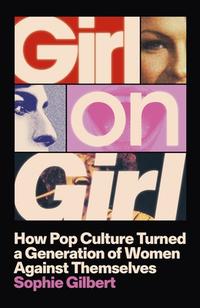
Girl on Girl by Sophie Gilbert
Sophie Gilbert provides one answer, identifying an inflection point in the late 1990s and early 2000s when the energy of third-wave and “riot girl” feminism collapsed into a regressive period of hyper-objectification, sexualization, and infantilization. Gilbert mines the darker side of nostalgia, training her keen analytic eye on the most revealing cultural objects of the era, across music, film, television, fashion, tabloid journalism, and more. Amid a collective reconsideration of the way women are treated in public, Girl on Girl is a blistering indictment of the matrix of misogyny that undergirded the cultural production of the early twenty-first century, and how it continues to shape our world today.
by Damla
“The things we watch, listen to, read, wear, write, and share dictate in large part how we internalize and project what we’re worth.”
Looking back at the 90s and the 2000s is a little bittersweet for me. On one hand, there is the nostalgia of my childhood with its distinctive fashion trends, grunge and pop icons, and the explosive energy of “Girl Power.” On the other hand, has popular culture ever been more overtly misogynistic and toxic than it was back then? The darker, psychologically corrosive side of the content created in those decades are only clear to me now, but it was so much of what we consumed on the internet, in the glossy magazines for teens, on the TV, in the music, and out in the world on massive billboards.
Which is why it was so heartbreaking and frustrating to read Girl on Girl, especially given that the book delves into the period when I grew up and consumed the kind of manipulative and potentially harmful media without really understanding its true intent and meaning.
In her book, Sophie Gilbert explores the direct effect that culture, feminism, and history have on each other by looking at the media we were exposed to in the 2000s, pulling references ranging from movies and TV shows to advertising, music, porn, tabloids, and the news trends in general.
She starts off with exposing how the raw and spirited Riot grrl movement at the start of the period got turned into girl power: how this hunger for autonomy, opportunity, and safety could be transformed into something dulled and used by capitalism under the guise of furthering it. The capitalist and consumerist wash on “girl power” ended up pulling focus away from the more important, critical issues of physical safety, bodily autonomy, financial security, and access to equal opportunity. In a way, this issue remains particularly relevant today.
“There was a moment at the beginning of the twenty-first century when feminism felt just as nebulous and inert, squashed by a cultural explosion of jokey extremity and technicolor objectification.”
As a millennial who grew up with Spice Girls, I can’t quite bring myself to dislike the girl power movement, but looking back, it is clear to see that this brand of empowerment was heavily interlaced with consumerism. Yes, it was cool to be a girl, and to like girly things, and to be independent, but it also took on a post-feminist view that the work of feminism was accomplished. Yes, it was great to hear that you could be anything that you wanted, and you were smart/strong/good enough, but did it reflect the truth in practice? Could I really be an astronaut when the engineers in space centers were disproportionately male?
Girl on Girl paints a very bleak picture of the aughts, as it should. It makes me wonder how I, how any of us, made it out unscathed – if we did at all. But perhaps, if our growth was not without harm, it is possible to undo the damage and unlearn the abusive pattern. Despite the daily hurdles, the political assaults, and societal setbacks, women are more open-eyed now to call out these abusive and manipulative behaviors. With the use of more platforms more women can express themselves and show resistance and skepticism to the efforts to drag any progress backwards.
“I’ve always wondered why people diminish girlhood as somehow cosseted or twee, when the reality of coming-of-age as a young woman is so raw, filled with emotional violence and literal blood.”
Personally, I like to believe that I survived mostly unscathed, with much credit to my love of reading. Reading much and diversely, consuming media outside of the mainstream, and surrounding yourself with the right people are wonderful ways to give one an understanding and ability to question. And this book acts as a worthy addition to the arsenal in the fight. Because as difficult as it was to read it, it was also fascinating, infuriating, and eye-opening to look at our recent history and use that as a new tool for media literacy today.