by Lynn
Growing up in nearly all-white rural Minnesota, I didn’t know about the Holocaust until doing research for a paper on social resistance, age twenty. I could have known – Anne Frank’s diary was widely read by my 13-year old classmates but, being contrarian, I didn’t read it then. I was raised like so many Midwestern American kids that “Jesus loves the little children, all the children of the world; red and yellow, black and white, they are precious in his sight” – but didn’t really know other-colored children, or children of other beliefs, until I went to the Twin Cities to study. Our town had Jewish-owned retail shops (which I scouted weekly) but to my knowledge, no Jewish residents in the town of 10,000 persons.
I did read Anne Frank’s diary after coming to Amsterdam while staying on the Prinsengracht across the canal from where she was hidden. Realizing that she and I had heard the same bells of the Westerkerk chiming the hours collapsed what had seemed like ancient history from a rural American perspective into a relatable, almost recent tragic experience.
Although the first owners of the bookstore were Jewish, they didn’t talk to me about the Holocaust. That was part of their shared experience, not mine. Only when Leo Bretholz came from Baltimore to replace Mitch Crossfield as store manager were his personal stories of the Holocaust shared with me.
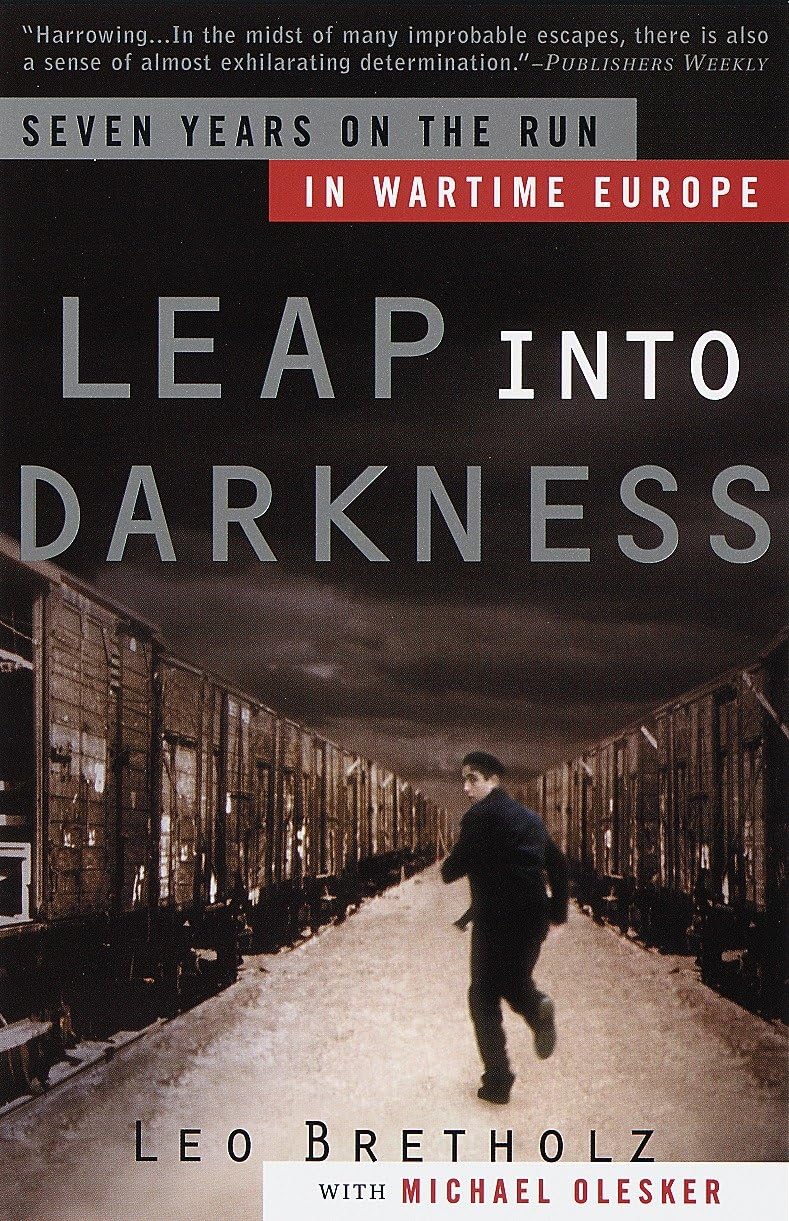
Leo, born in Vienna, had been helped as a teenager to flee to Belgium, sent forth by the family he’d never again see. He swam a frozen river, was arrested, interned, escaped, caught again, put on transport to Auschwitz and leapt into the darkness from that train, only to be caught and to escape seven times before collapsing in Paris into the care of nuns.
He lost 53 relatives in WW2. Knowing this made it difficult to say no to Leo about anything, but he was no tyrant. A gentle man who told jokes and stories all the time, Leo had returned to Europe with his family to come to terms with his past, to help the owner, his friend Sam Boltansky, and to give his girls and wife a taste of European life. When they returned to Baltimore after two years to run another of Sam’s bookstores there, a journalist customer helped Leo to write his memoirs upon retirement.
Leap into Darkness
The resulting Leap Into Darkness was first published by a very small publisher but got enough attention that Anchor, now part of Penguin Random House, picked it up. This drew a larger readership, followed by speaking dates at schools, on radio and later television. By the time I met up with Leo in Pennsylvania years later, he was 93 and a celebrity!
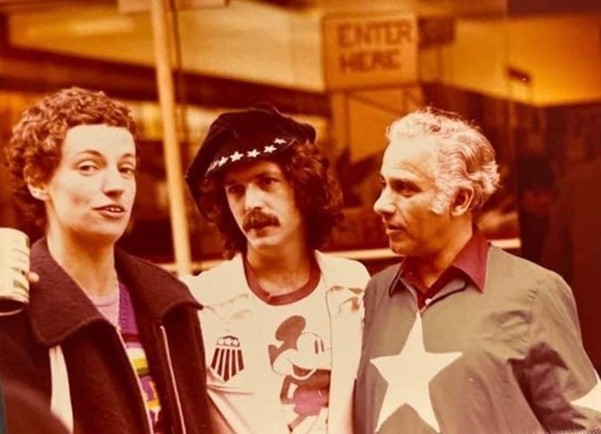
Maggie, Michael and Leo at ABC in the late seventies
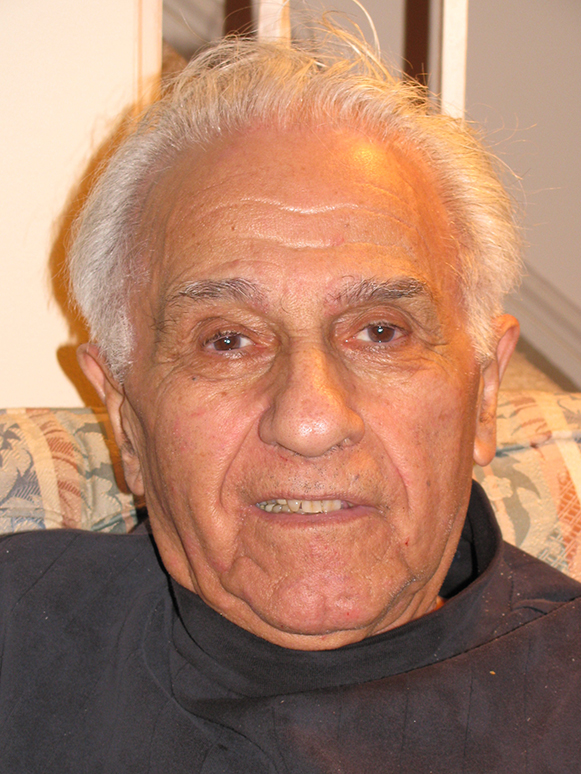
His book was published in Dutch, and the publisher brought Leo and his wife and two girls back to the Benelux for a speaking tour. While here, he spoke to students at the International School of Amsterdam and at ABC.
In the years he led ABC (1975-77), Leo met people outside his Baltimore Jewish circle too – many staff members were gay or trans or queer (plus one from the Christian heartland). He exchanged stories with everyone, showed personal interest and carried our pain as we shared his.
When Leo wanted to return to Baltimore, Sam asked me to be the manager as he needed someone he trusted to make the bank deposits. We couldn’t order much of our stock at that time – Sam filled a shipping container with remainder books and we sold what we got. There was no CAO (Collective Labor Agreement) then, so our Dutch employees informed us about the system of workers’ rights. A hired bookkeeper kept us within guidelines, which were a challenge to explain to American Sam. He did pay bonuses based on a percentage of sales at year’s end, but left me to organize the rest of the business.
I was busy, having just birthed Nadine in January of 1977. Avo worked a full-time job at the national refugee work council, and I oversaw the bookstores in Amsterdam and The Hague – together with Joe Neesan in The Hague and the amazing Amsterdam staff. Avo and I moved to Landsmeer, found childcare and commuted daily, parking on the Spui for free all day.
In January 1980, we were invited to a weekend in Friesland by one of my husband’s Palestinian student friends. Exhausted, Avo, Nadine and I went. I was looking forward to a quiet weekend with Nadine, as the guys would be telling jokes in Arabic, which I don’t understand, and cooking their favorite dishes. But when we arrived at the farmhouse outside Drachten, my life changed. There on the walls, on all the beds, stacked in all the closets were North American quilts! After the weekend, I got the name of the farmhouse owners and called, asking if I might purchase one of the quilts. “Oh, no, that’s impossible,” said Mrs. An Keuning on the line. “But you can have one.”
I didn’t understand what she meant. But 10 years later, it occurred to me that the quilts would make a nice exhibition in the 4th Floor Galley at our store, where the Nike store is now at Kalverstraat 185. I called Mrs. Keuning again and reintroduced myself. “Lynn!” she exclaimed. “When are you coming to get your quilt?” I explained that this was too large a gift, but that I would like to exhibit them in our store on the Kalverstraat, and she agreed.
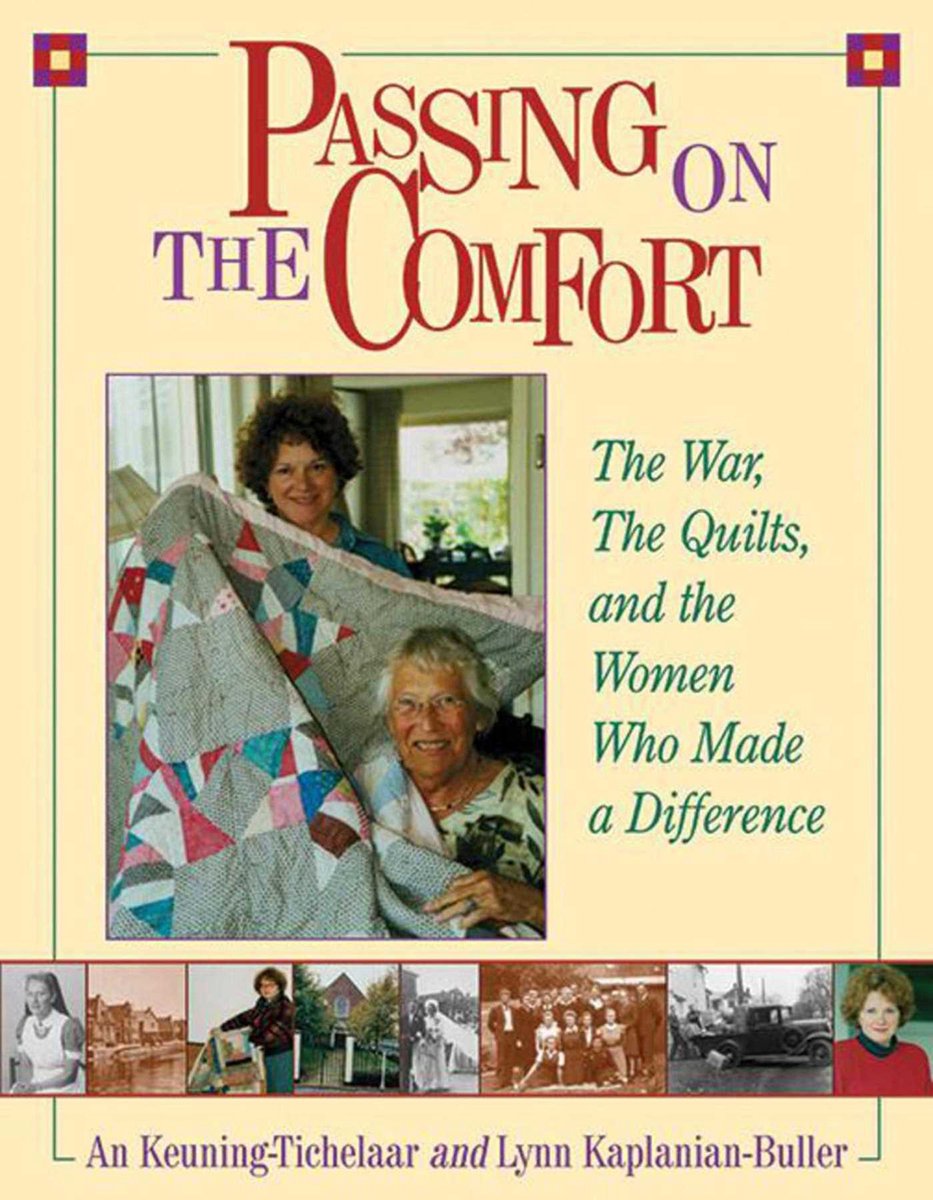
Passing on the Comfort: The War, the Quilts and the Women Who Made a Difference
When I went to collect the quilts in Friesland, it became obvious that An and her husband Herman Keuning had done serious resistance work during WW2, although they didn’t talk about it. Even their children were unaware. I encouraged her to write her experiences down and share them with others. These were people who had given up a personal ID for a Jewish student, who sheltered and hid children, resistance workers, and Jews in rural Friesland in the most practical ways.
How to cook for 20 mouths from rations for two, for instance. An’s experiences were astounding, yet all written humbly. At first, they filled a 42-page booklet. But after meeting the American Mennonite publishers Good Books, who were specialized in quilts, another idea emerged. I was asked to expand the book to include chapters about how I got to the Netherlands and found the quilts, and add more information for North American readers about WW2. It was, for most of this public, long ago and far away.
So, to fill out the book, I researched the Nazi Occupation in the Netherlands.
An and I wrote it, she transferred the quilts to me, we brought the book back to the quilt makers on an 18-month tour through Canada and the USA, and later to the War Museum in Kiev.
Not only did I learn about WW2, but the process of having the work published gave me a writer’s perspective on bookselling. I had never realized the importance of an editor, unsung heroes! Publicity generation, rights, contracts, royalties, translations later into Dutch and German versions were all learning experiences.
I recently transferred the project to An’s granddaughter, artist and author Sanne van Balen.
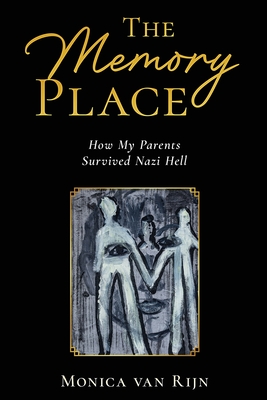
The Memory Place
Hearing and reading Leo Bretholz’s and An Keuning’s stories prepared me to read Monica van Rijn’s new book, The Memory Place, about her parents and their flight from Nazi camps. I recommend you read it, too, and come to the book launch on May 3 at ABC Amsterdam and have your copy signed by the author!
It got me thinking that most Americans, even of our boomer generation, don’t relate to the conditions of war unless they’ve served overseas in the military. War simply hasn’t come to the US in modern memory – except for the 1943 attacks on Hawaii and on NYC in 2001 – so society can’t imagine what war is like.
Monica adds,
“Most Americans have never experienced war on their own soil, nor have they lived with hostile foreign soldiers daily invading their city streets, their stomping grounds, their work space and enforcing the new aggressive laws that forbid certain members of society (38 minority groups) from entering theaters or public places. Ostracized, isolated, terrorized, starved and exterminated. Europe has.”
This is in contrast with Europeans, for whom even 85 years still feels recent, let alone in the present. The ongoing war in Ukraine is just a two days’ drive from the Netherlands, Gaza, Israel and Lebanon a short plane ride when airports are open.
The stream of memoirs about WW2 does not seem to dry up, even all these decades later. For survivors of war and their children, there is a huge need to tell their stories. Many survivor parents shield their children with silence, telling only outsiders decades later, if at all. Yet the stories are as close as most of us will get to experiencing war. As Leo tells of the old woman in the cattle car on the way to Auschwitz who “lifted her wooden crutch into the air and cried, ‘Who else will tell the story? Now go! Go ahead!’ And so he did.”
All these years after WW2, when numerous other wars have come and gone or come and stayed, millions of stories are waiting to be born into words. Will they be published, circulated, believed? How much trauma and tragedy must be sweat into words before we recognize the real cost of waging war – even when land is won? Our children gone to soldiers and coming back, if they do, forever scarred by what they’ve seen and done? This everlasting price is not calculated – how heavy weigh the stories of the generations to come?
I wish that Monica’s decade of struggle writing this book, Leo’s decades of writing and speaking, An’s and my 25-year project to get the stories out, will have impact somehow, along with the other stories of people who found something positive to do in the context of war.Who will write stories about these experiences to inspire us and stand down the cynics who are stuck with war as a solution, even as war rolls on and on? And who will read the stories, or listen to them?
It’s difficult to let that much suffering into my own heart, I know, without the context of being able to do something to contribute something. I admit to looking away because I can between choosing how to best share support from afar. Cynics often say there is no alternative to war, but if we studied alternatives like we study war, I’m hopeful that ways can be implemented. In the meantime, what’s wrong with sitting in a circle telling stories with our “enemies” and singing, sharing the land, seas and air?
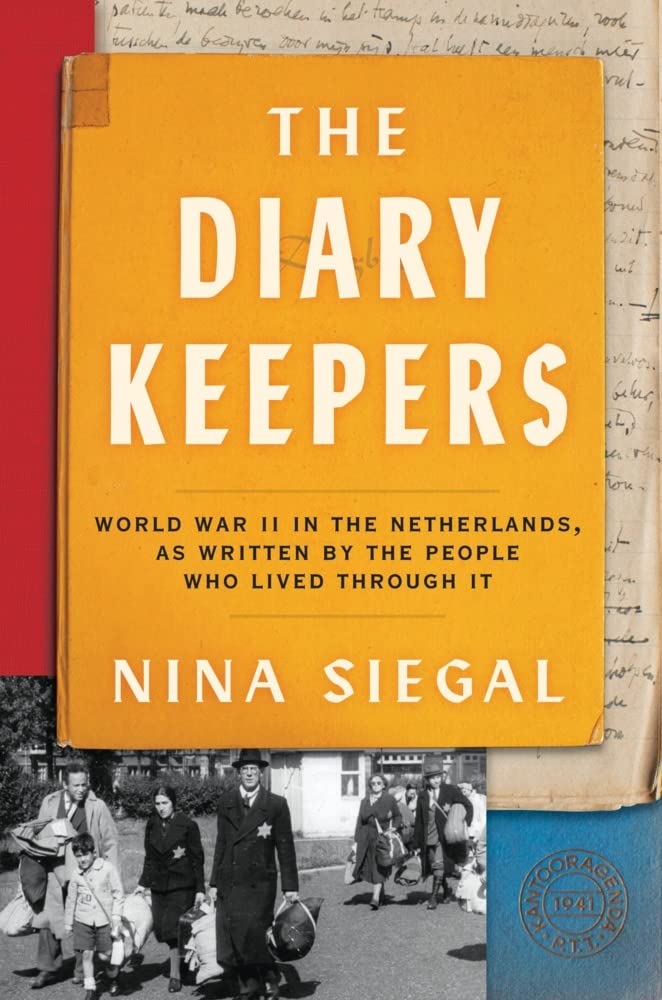
Want to read more? Check out these titles: