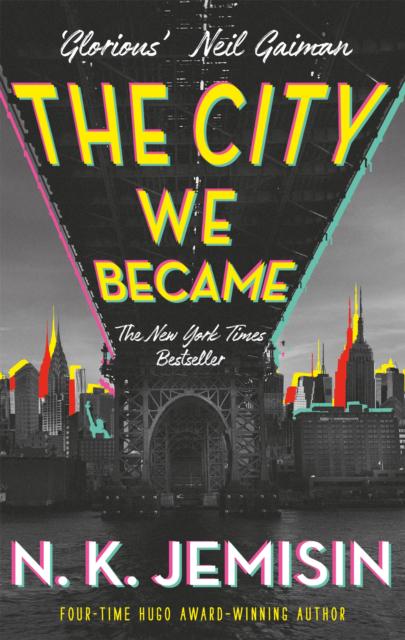
The City We Became by N.K. Jemisin
In Manhattan, a young grad student gets off the train and realizes he doesn’t remember who he is, where he’s from, or even his own name. But he can sense the beating heart of the city, see its history, and feel its power.
In the Bronx, a Lenape gallery director discovers strange graffiti scattered throughout the city, so beautiful and powerful it’s as if the paint is literally calling to her.
In Brooklyn, a politician and mother finds she can hear the songs of her city, pulsing to the beat of her Louboutin heels.
And they’re not the only ones.
Every great city has a soul. Some are ancient as myths, and others are as new and destructive as children. New York? She’s got six.
by Damla
“Come, then, City That Never Sleeps. Let me show you what lurks in the empty spaces where nightmares dare not tread.”
What makes a city? The layers upon layers of history that has formed its foundations? The people who live in it? The melting pot of cultures, traditions, and beliefs? The monotony of its daily life? Its roads, buildings, parks, sidewalks?
The City We Became is an incredible exploration of what makes the soul of a city, NYC in particular, that blurs the line between Lovecraftian fantasy and reality. More than anything else, it is a love letter, an homage to the great city, in all its intimidating, misunderstood, and breathing glory.
The plot itself is like nothing I read before: the city is newly born, stumbling and struggling to survive, while fighting off an unknown darkness that wants to devour its life spark. Except, this is a fight like you have never imagined, because it pits the best and the worst of the city against each other: the looming threat manifests itself in bigotry, greed, and selfishness. The city fights back with the help of the avatars it has chosen to represent each borough, striking with its incessant roar of traffic, the determined and angry glare of its pedestrians, the smell of exhaust fumes and ambition and small bakeries, the hard work of generations of immigrants. The result is a magnificent fantasy that touches upon the soul of cities, their power dynamics, rhythms, issues of race, violence, xenophobia, and so much more.
To be honest, the start of this novel does feel like a battle through the first 50 pages. It is a disorienting and sudden drop into the very beginning of a conceptual, cryptic, and almost lyrical story. But if you stay with it just a little while, you might blow past chapter after page like me, holding your breath, completely absorbed in it. It is very much worth the effort to experience this wildly imaginative, inspiring, poetic piece of writing that Jemisin has to offer.