by Sophie
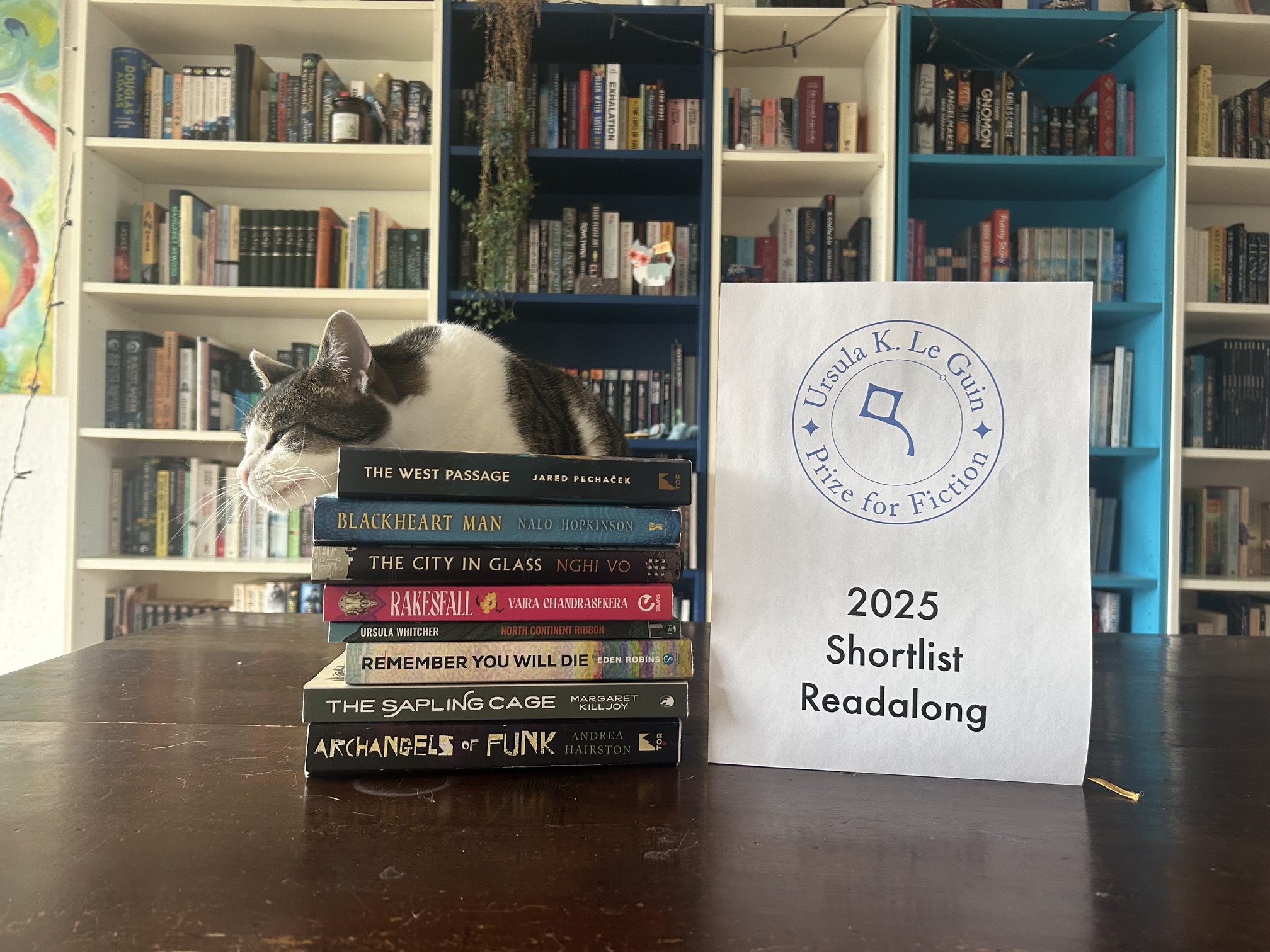
Since the inception of the Ursula K. Le Guin Prize in 2022 I’ve been reading along with the whole shortlist each year. I’ve written about the books here on the blog for the 2023 and the 2024 prize, and here – FINALLY – is my report on the books nominated for the 2025 prize. Right after the shortlist for the 2026 edition was announced!
(Yes, an explanation for my tardiness will be included below, besides the fact that I’m simply not a very fast reader and I want to read each of these books with the attention they deserve—and that means taking a break every now and again to read something in other genres.)
The 2025 prize’s shortlist was filled with science fiction, fantasy, afropunk, short stories, and speculative fiction—one of the reasons I love this prize is the breadth of the genres that make the shortlist. The winner is the book that best fits the following statement:
“The Prize will be given to a writer whose work reflects the concepts and ideas that were central to Ursula’s own work, including but not limited to: hope, equity, and freedom; non-violence and alternatives to conflict; and a holistic view of humanity’s place in the natural world.”
Like last year I will write mini-reviews of each book on the shortlist, in least-liked-to-this-was-amazing order, with a little note on who won at the end.
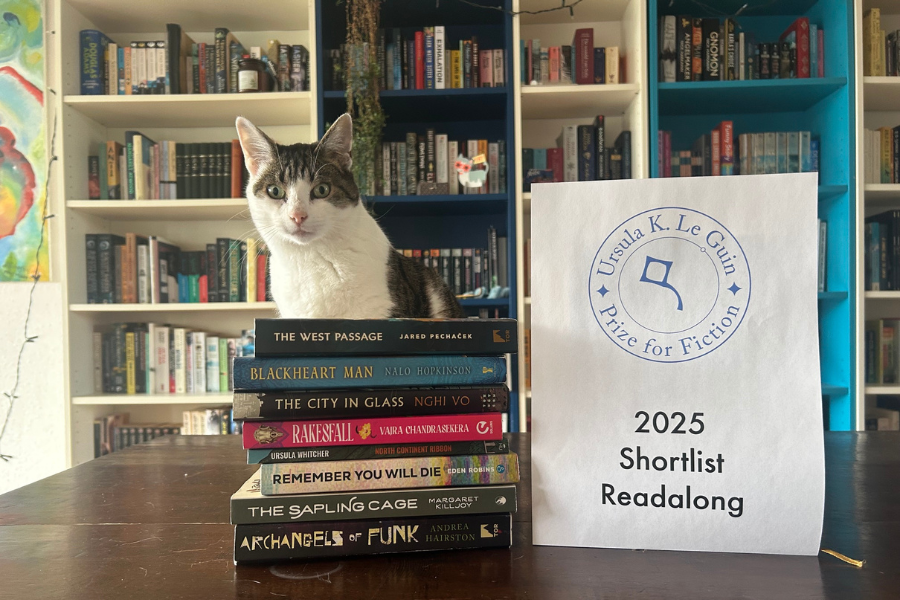
Archangels of Funk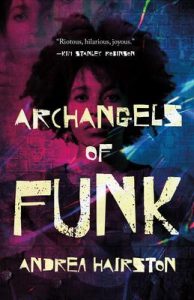 by Andrea Hairston (DNF)
This book is the reason I’m so very late with this write-up. I ended up not finishing it–and I tried. I REALLY tried. For six months. I started it, restarted it, and restarted it again. And each time I was excited to start, too: the setting is a not-too-distant USA, not exactly post-apocalyptic but there are water shortages and raiders; it’s an unsafe place. It’s also very diverse in terms of race, gender, and age. There are robots, dog points-of-view, and Native American spirits. I mean, what’s not to like about this set-up, right?
It turns out that I can’t deal with characters and a writing style that are entirely restless. The characters never pause; they don’t just get off their bike, they bebop and shimmy and sing while they do it. The robots aren’t just sentient, they are filled with the spirits of grandparents who bicker and chastise and sing and act. Gang members repent and snipe and skedaddle and sing. If this is your jam, go read this book! You’ll love it. For me, I just couldn’t keep up.
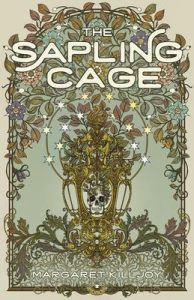 The Sapling Cage by Margaret Killjoy
3 stars (out of 5)
First things first: I love this cover.
Now, the story: Lorel wants to be a witch, but witches are women, and she was born a boy. She disguises herself as a girl when the coven comes to the village, though, and joins them to help fight the blight sweeping across the land. I enjoyed the setting very much, and the stakes. The witches were enjoyably obtuse, the magic system was interesting and gruesome, and there were some stand-out creatures and scenes.
I didn’t like Lorel very much, unfortunately, at least for about 3/4 of the book. She was too angsty by half, for me, but then, I’m middle-aged and not desperately trying to figure myself out anymore. All in all an enjoyable coming-of-age fantasy about found family and resistance, with a trans main character.
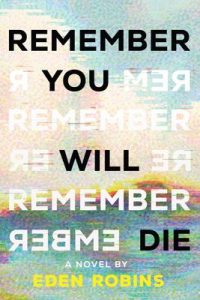 Remember You Will Die by Eden Robins
3.5 stars
A book told through obituaries—what an idea! And it works, somehow: the obituaries connect back and forth, and the writer of one is the dead person being written about in another. The book bounces back and forth in time, and it was a little tricky for me to keep track of characters. I thought Robins cleverly used different types of obituaries, though: newspaper articles, stone epitaphs, natural phenomena, network archives, they all made for interesting reading.
But beyond the gimmick the story hasn’t really stuck! I missed the narrative cohesion. I suspect this is a book to read and then to immediately reread to pick up the clues you might have missed the first time. But I had another 8 books to get to so I didn’t allow myself that luxury, at the cost of the rating.
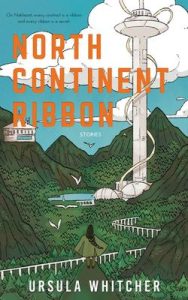 North Continent Ribbon by Ursula Whitcher
3.75 stars
These interconnected short stories all take place chronologically on or around the same planet, Nakharat. It’s the most straightforward (social) science fiction book of the shortlist. Each story fills another piece of the puzzle in terms of factions, technology, and history, linking back to a previous story’s characters or events (I love me some interconnectedness!). I really liked the notion of showing your allegiances through the ribbons in your hair—but being able to cover them up if you want that to remain unknown. Machines require consciousness but this is not freely given—and one of the stories takes the point of view of a ship AI that is a lot more than that. The personal struggles take a forefront, a little bit to the detriment of the high stakes. By the end you feel like you’ve lived on and know Nakharat, and I enjoyed it a lot.
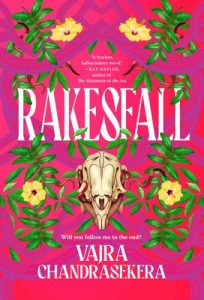 Rakesfall by Vajra Chandrasekera
3.75 stars
To call this book ambitious would be to do it a disservice. It is an epic story told through two characters who circle around one another throughout time, space, and bodies in a dizzying arc (reminding me a little of This Is How You Lose the Time War). There are themes of war, intergenerational trauma, colonialism, the undead, mythology, and revenge, to name a few (reminding me a little of The Seven Moons of Maali Almeida, also because most of the setting is civil war Sri Lanka). Part of it is written as a play, and some of it as folkloric stories, making a literary patchwork that works very well. The scope is absolutely enormous, as is the timeline, which goes from the far past into the future where our sun is dying. I was very impressed, but, much like Chandrasekera’s previously short-listed title, I just never felt able to lose myself in the story, possibly because it aims so very, very high.
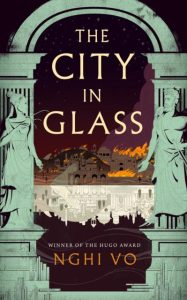 The City in Glass by Nghi Vo
4 stars
A thunderous start sees the city of Avril, joyful and shining, laid waste by angels. Vitrine, the devil who cultivated the city through generations, witnesses this. She manages to curse one angel, who is doomed to stay in the place he sacked, with Vitrine. What follows is a beautifully told tale of rebuilding, grief, and unexpected allyship. I loved Vitrine and her angel, and their growth, both as characters and as a pair doomed to haunt the city together. The timeline is vast, because Avril isn’t rebuilt in a day, and you really get the sense of loss as Vitrine watches people she befriends and loves grow old and die, generation after generation. Seeing the city grow again also really ups the stakes for the reader when it is again threatened. A very beautiful tale.
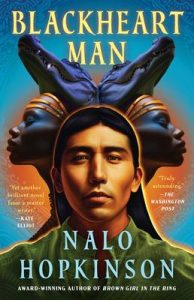 Blackheart Man by Nalo Hopkinson
4.25 stars
The island nation of Chynchin is a beautiful place where the twin goddess Mamacona keeps watch. There is no concept of money, and history is preserved through chants and songs. One day a fleet of galleons from neighboring Ymisen enters the harbor, with ill intent. Into this uneasy stand-off you follow Veycosi (a somewhat floppy griot-in-training), a reawakened cursed character from a century past, and many more colorful characters, gods, and animals.
My overall impression of this book is joy—despite the threats and the many dead and the dreadful curses. Veycosi starts off immature and clumsy, despite being of age, but his joy and wonder at the world are infectious. And I just loved the society Hopkinson invented. A tropical, socialist paradise that makes you reconsider our own capitalist world. Not that it’s without its share of social and political troubles, mind you, even before the Ymisen arrive, and I appreciated that even more because it felt very honest. I loved visiting this world, even though the story wobbled a bit towards the end, for me.
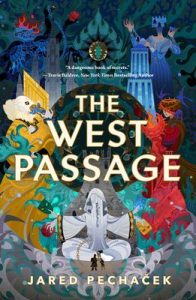 The West Passage by Jared Pechacek
4.25 stars
“When the Guardian of the West Passage died in her bed, the women of Grey Tower fed her to the crows and went back to their chores. No successor was named as Guardian, no one took up the fallen blade; the West Passage went unguarded.”
This is a rather bewildering medieval fantasy that I find myself thinking back on regularly. Think Alice in Wonderland, but then set in a Hieronymus Bosch painting. There are monstrous bird- and tower-headed Ladies, wasted feasts, bunny-eared apprentices, quests, and, of course, a rising Beast that threatens all. Entirely odd, but in the best kind of way. To say more would be to take away the reader’s curiosity about what Pechacek will think of next, and I really don’t want to do that.
The author drew all the wonderful illustrations at the start of each chapter himself. And I love books with descriptive chapter titles like “Yarrow Disembarks Before Her Scheduled Stop” or “The Mask Is Broken and the Women in Grey Say Very Little About It.” A very special book.
 Another quality shortlist, despite my inability to finish one (and that’s on me, not the book). I met six new-to-me authors, and was dazzled by the concepts and styles on display. The eventual winner of the 2025 prize was Rakesfall by Vajra Chandrasekera, and in context of the prize I can see why. Despite the horrors of war, there is a holistic (or Akashic, as Chandrasekera would say) view of mankind there, and always there is a glimmer of hope, even in the dying days of the sun.
And now, onto the 2026 shortlist! Hopefully the write-up for that one won’t take a whole year…